Patient Community
Day 2026

Impact Report
A Year in Review | 2026
Patient Community
Day 2026
Impact Report
A Year in Review | 2026
In 2026, Patient Community Day continued its mission to make scientific progress more accessible, strengthen international collaboration and ensure that the perspectives of people living with MS, NMOSD and MOGAD remain central to discussions about research and care.
With the event hosted in Toronto, the time difference presented a particular challenge for live participation across Europe, Asia and other regions. Recognising this, the 2026 approach placed greater emphasis on extending access beyond the live programme, through Supporting Partner watch parties, on-demand recordings and continued post-event circulation of educational content. Three priorities guided this year’s programme:
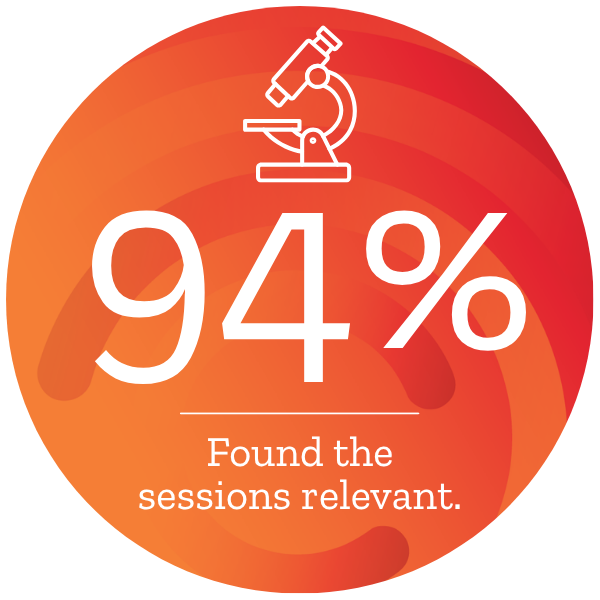
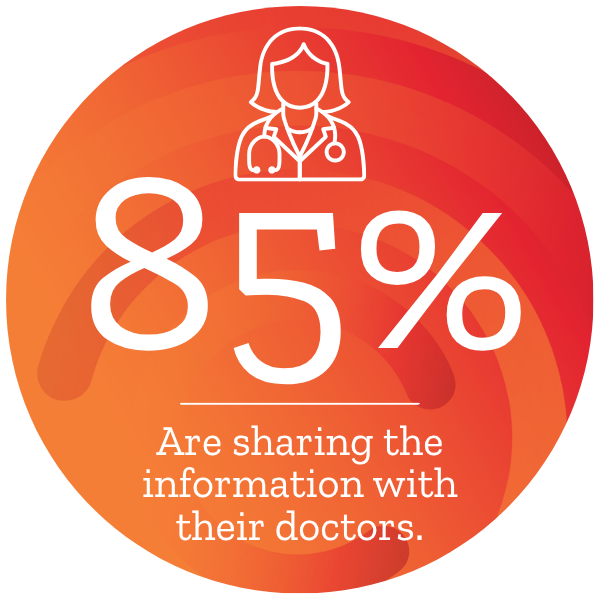
 Making science accessible, relevant and actionable: From the latest clinical developments to emerging research on remyelination, brain health, ageing and reproductive health, PCD translated complex scientific advances into meaningful information for the patient community. Expert-led discussions and opportunities for direct questions helped participants connect new knowledge with their own experiences and healthcare decisions. Post-event survey findings reinforced this value, with 94% of respondents finding the sessions relevant and 85% indicating they would or might use what they learned in discussions with their healthcare providers.
 Strengthening global partnerships and lasting connections: The Supporting Partner Programme brought together 64 organisations across 28 countries and six continents, extending PCD’s reach through an international network of patient organisations, advocacy groups and healthcare communities. In 2026, these partnerships also created opportunities for collective participation through locally organised watch parties, helping communities engage with the programme together. The introduction of the Destination Partner initiative further strengthened connections between current and former host cities, laying the foundations for a legacy that extends beyond the annual event.
 Expanding accessibility, inclusion and year-round engagement: Recognising the challenges of delivering a live event across multiple time zones, PCD placed greater emphasis on making its scientific content accessible beyond the three-hour programme. Alongside hybrid participation and AI-powered translation in more than 50 languages, the wider distribution of session recordings, educational resources and short-form video content created additional opportunities for people to engage with the research at a time that suited them. With 4,276 registrations worldwide, the event demonstrated continued international interest in accessible, patient-centred scientific education, while participant feedback highlighted opportunities to further strengthen the digital experience and engagement in future editions.
Strong engagement, practical knowledge and a community eager to return
The voices of participants are central to the continued development of Patient Community Day. In 2026, nearly 300 people completed the post-event survey, providing valuable insight into how the programme is meeting the needs of people living with MS, NMOSD and MOGAD, and where its impact extends beyond the event itself. As Patient Community Day continues to evolve, listening to the community remains essential to ensuring that the programme reflects the needs, experiences and expectations of the people it was created to serve.
 Scientific knowledge that remains relevant
Patient Community Day 2026 continued to deliver information that resonated with its global community, with 94% of respondents finding the sessions relevant and 92% rating the information provided as good or excellent.
Participants particularly appreciated the opportunity to learn about the latest scientific developments, from emerging treatments such as BTK inhibitors and CAR-T cell therapies to advances in remyelination research. Topics addressing the realities of living with MS, including ageing, disease progression, brain health and lifestyle factors, also attracted considerable interest.
The feedback reinforces the importance of providing timely, reliable scientific information in a format that makes complex research understandable and relevant to the patient community.
 Turning knowledge into meaningful conversations
One of the clearest indicators of PCD’s practical impact is whether participants can use what they learn in discussions about their own treatment and care..
In 2026, 85% of respondents said they would definitely or might use information gained during Patient Community Day in discussions with their healthcare team, up from 79% in 2025 — an increase of six percentage points.
Of these, 60% said they definitely intended to use the information, while a further 25% said they might. This encouraging result highlights the importance of making scientific research not only accessible, but relevant to the decisions and conversations that shape everyday care.
 A community that wants to stay connected
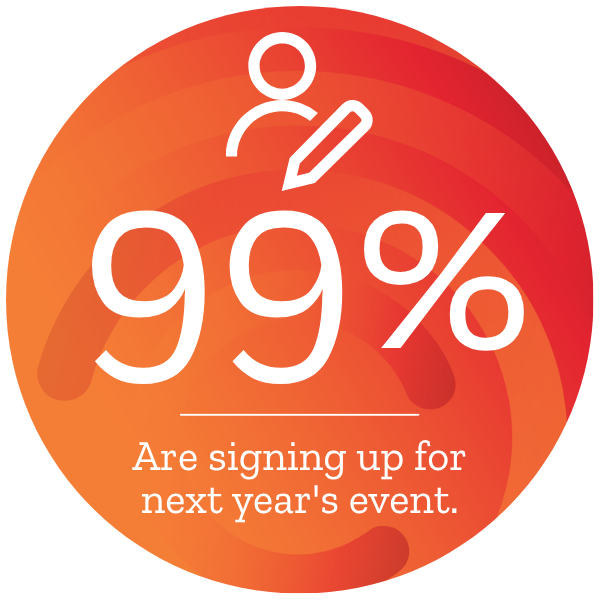
The desire to remain part of Patient Community Day continues to be exceptionally strong. In 2026, 99.5% of respondents indicated that they would or might attend a future edition, maintaining the same high level of interest recorded in 2025.
This sustained enthusiasm reflects the value of having a dedicated space where the patient community can engage directly with leading researchers, explore the latest scientific developments and share experiences. It also reinforces the importance of continuing to build connections that extend beyond the annual event.
 Your feedback, our roadmap for 2027
Beyond the scientific knowledge, participants’ written feedback revealed just how much the experience meant to them on a personal level. Many expressed appreciation for the dedication of researchers and the opportunity to hear directly from experts working to advance treatments and improve care. Others highlighted the importance of including people with lived experience, whose perspectives brought a human dimension to the scientific discussions.
Hope, reassurance and a sense of connection emerged as particularly meaningful themes. For some, hearing about the progress being made offered renewed optimism for the future. For others, it was the feeling of being part of a wider community, knowing that their experiences and concerns were shared and recognised.
 Your thoughts on where we need to improve
Participant feedback also highlighted opportunities to strengthen future editions of Patient Community Day. While the scientific programme was widely appreciated, some participants experienced technical difficulties. Others called for more opportunities to interact with experts, greater representation of diverse patient experiences and improvements to the accessibility of the online programme.
These insights will help shape Patient Community Day 2027, with a particular focus on improving the digital experience, strengthening accessibility and creating more opportunities for meaningful lived experience engagement.
“No one knows what it’s like to have multiple sclerosis quite like another person with multiple sclerosis,” he said. “Even if your symptoms or your pathology are different, that thumb on the scale is the same. I show up with a clear mind and open ears because I want to see what other folk are making of this moment we call ‘right now’.




Since its launch in 2022, Patient Community Day has evolved from a single annual gathering into a growing international platform connecting people living with MS, NMOSD and MOGAD with the scientific community. In 2025, the introduction of a dedicated website, educational resources and year-round communications marked an important step towards creating a more permanent connection with the patient community.
In 2026, that ambition continued to take shape. With an expanding global audience, a growing network of Supporting Partners and new opportunities for collaboration, Patient Community Day is laying the foundations for something that extends well beyond the three hours of its annual programme.
The next stage of this journey is about creating a lasting legacy in the communities that have welcomed ECTRIMS over the years.
 A lasting footprint in ECTRIMS Congress host cities
For more than four decades, the ECTRIMS Congress has brought the international MS research community to cities across Europe (as well as North America during joint congress years), often returning to established host destinations. Each gathering creates opportunities for scientific exchange and collaboration.
Our long-term ambition is to build on the relationships established in Congress host cities, working alongside local patient organisations, researchers and healthcare communities, and destination partners to create opportunities for education, collaboration and engagement that continue long after the event. We imagine a growing international network of cities, each with its own Patient Community Day legacy — connected by a shared commitment to bringing science closer to the people it serves.
 A pillared approach designed for diversity & inclusivity
A meaningful legacy cannot be created through a single model applied everywhere. The needs of patient communities differ across countries, healthcare systems and cultures. Our approach must therefore be collaborative, drawing on the knowledge and experience of local organisations to identify opportunities that are relevant, achievable and sustainable.
This could mean strengthening access to educational resources, facilitating connections between researchers and patient organisations, supporting locally led initiatives or creating new opportunities for people affected by MS and related conditions to engage with scientific developments.
The 2026 ECTRIMS–ACTRIMS Joint Meeting in Toronto provided an opportunity to support a multi-partner research initiative to promote sustained employment for people living with episodic disabilities.
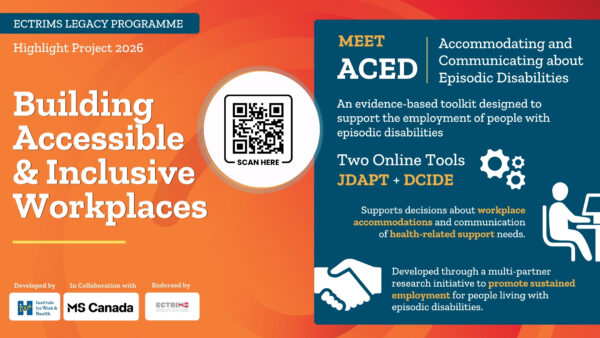 Led by the Institute for Work & Health, in collaboration with MS Canada, this year’s highlight project raises awareness of the Accommodating and Communicating about Episodic Disabilities (ACED), an evidence-based workplace toolkit designed to support the employment of people with episodic disabilities.
ACED consists of two free-to-use digital tools:
The first, the Decision-Support for Communicating about Invisible Disabilities that are Episodic (DCIDE) tool, helps people to consider whether, when and how to disclose their condition. It guides users through their personal goals, communication preferences and workplace environment, helping them make an informed decision that feels right for them.
The second, the Job Demands and Accommodation Planning Tool (JDAPT), helps people identify the demands of their roles and explore strategies and adjustments that could help them stay in the workplace.
Working with People With MS: Why it Matters
 The project was chosen because employment is about much more than earning a salary. For people living with a neurological condition, maintaining a fulfilling working life can be an important part of overall wellbeing.
Ben Davis, Senior Vice-President of Mission at MS Canada, explained: “Work is a key determinant for financial security, health, and overall quality of life. Yet we also know that for people living with MS, particularly those with episodic forms of the disease, staying in the workforce can be challenging.”
The unpredictable and often invisible nature of MS symptoms can make employment challenging. Fatigue, cognitive difficulties, mobility issues and bladder problems, for example, can all affect someone’s ability to work, sometimes changing significantly from one day to the next.
“People with these types of conditions are frequently living with the invisibility of symptoms and the variability of symptoms,” explained Julie Pétrin, Director of Impact and Evaluation at the organisation. “Their employers might see them as fine, and they see themselves as fine, but what about the morning they wake up and are not fine? What happens then?”
Empowering people with the tools with succeed
Julie explained that the ambition of ACED was empowerment. “Rather than taking the deficit-based approach used by many tools – asking what is wrong with someone and how those difficulties can be mitigated – the JDAPT takes a much more empowering approach. It asks: ‘What do you need to excel in this position?’,” she said.
“We are not defined by a deficit. We are capable, productive people who want to remain in our roles. It is important that people feel able to continue contributing, and pointing out what someone cannot do helps nobody.”
Available to people worldwide
Reflecting on her own difficulties when deciding whether to share the news of her diagnosis during her academic career, Julie said she “waited too long” to ask for support.
“Even just the disclosing step was difficult. I didn’t have the tools at the time, so I waited until I was in distress. This is certainly not what I would advise anyone to do,” she said, adding that she hopes the Legacy Project Programme will bring the tools to a wider, global audience.
 “Having discussions and raising awareness of these tools is really important because a tool is just a tool unless we know it exists,” she said.
Indeed, one of the reasons the project was chosen, said Ben, was its potential to benefit huge numbers of people.
“We were really pleased to be part of this project to help remove barriers and provide more options for people who wish to stay in work,” he said. “Employment and retention are global problems. So with the global audience we had in Toronto, we felt that it was really important to highlight these tools and this project for the whole community.”
ECTRIMS Patient Community Day provided an important opportunity to raise awareness of the project and introduce the resources to a wider international audience. The next challenge is turning availability into impact, said Ben. “We have great tools, but translating that into action and making sure there is good uptake: that is the work ahead.”
Ongoing commitment: Retracing the 2025 Barcelona Legacy Project
It is not the first time the legacy project has focused on work and employment. At Patient Community Day 2025, in Barcelona, Ana Torredemer, President of MS Spain, announced a “pioneering project” aimed at raising awareness of and supporting Catalan companies to recruit and employ people living with MS.
Working with the Catalan Multiple Sclerosis Foundation (FEM) and Barcelona’s local economic development agency, the team created an accessible online training programme to help businesses better understand MS.
The training is delivered in short, bite-sized modules, giving companies practical guidance on everything from recruitment and onboarding to supporting employees who are diagnosed with MS while already in the organisation. More than 40 people attended a launch event, where they were also given a guide to managing talent with MS and, as of June 2026, 20 companies had taken part in the training.
There are also plans to build on this progress. The training is now available through two platforms – Barcelona Activa and the FEM – making it easier for more employers and HR professionals to access the resources.
FEM is also talking to two other organisations about delivering the training in person, alongside the online version. There is the possibility of translating the materials into Spanish so that employers across the country can also benefit, depending on securing funding. The aim is to give employers the confidence to recruit and support people living with the condition, explained Anna Llumà, Legacy Coordinator at Barcelona Convention Bureau.
“We saw the idea as something that could really add value,” she said, adding that major congresses attract world-leading expertise and knowledge that should benefit people beyond the conference venue.
“How can you not want to share all of that knowledge with your local community? We need to let everyone else take advantage of that.”
Find out more: Read our blog Working with MS: Navigating disclosure, support and change here
For the first time, the network spanned all six inhabited continents, welcoming partners from countries including Nepal, Jordan, Israel, Kosovo, Mexico and Argentina, alongside established advocacy and research organisations across the world.
This expansion coincided with another record year for Patient Community Day. Registrations reached more than 4,200.
This growth is significant far beyond the numbers.
Access to specialist care, reliable information and opportunities to participate in research varies considerably across countries and communities. By connecting organisations working within different healthcare systems, the Supporting Partner Programme helps bring scientific knowledge to wider audiences while creating opportunities for international exchange.
Importantly, it also strengthens connections with communities whose experiences and perspectives may be underrepresented in international research and advocacy.
A Network as Diverse as the Communities It Serves
One of the most important developments in 2026 was the increasing diversity of the organisations participating in the Supporting Partner Programme.
National MS societies and patient advocacy organisations remain at its heart. They provide essential links to people living with MS, NMOSD and MOGAD, their families and caregivers, helping ensure that scientific information reaches audiences through trusted community networks.
However, the programme now extends well beyond traditional patient associations.
Research institutions and specialist hospitals bring connections to clinical expertise and scientific discovery. Professional neurological societies and regional treatment-and-research committees strengthen relationships with the wider scientific community.
Digital communities, educational platforms and patient-led organisations – including Shift.ms, MStranslate and The Nerve of My MS – help make complex scientific developments more accessible, while creating opportunities for storytelling, peer support and meaningful community engagement.
The network also includes organisations such as the European Brain Council and Life Sciences Ontario, extending its reach into the wider healthcare and life sciences sectors and strengthening connections across research, innovation and advocacy.
This diversity is important because no single organisation can address every challenge facing the global patient community.
Some partners focus on access to treatment. Others work to improve representation in research, strengthen healthcare education, support families, challenge stigma or make scientific information easier to understand.
Together, they bring complementary expertise, perspectives and relationships to a shared mission.

Bringing the Global TRIMS Community Closer to People with Lived Experience
In 2026, ECTRIMS also took steps to strengthen engagement with regional treatment-and-research committees, commonly known as TRIMS organisations. These scientific networks play an important role in supporting neurological research, clinical education and professional collaboration across different parts of the world.
The 2026 Supporting Partner network included ACTRIMS in North America, MENACTRIMS in the Middle East and North Africa, and MEXCTRIMS in Mexico. Through these relationships, Patient Community Day can strengthen its connections with regional research networks, encourage greater international exchange and extend awareness of patient-centred scientific education.
 A New Destination Partner Initiative
Every edition of Patient Community Day takes place in a different host city, creating opportunities to build relationships with local patient organisations, healthcare institutions, researchers and community stakeholders.
But what happens to those connections when the event moves on?
In 2026, ECTRIMS introduced a new Destination Partner initiative to ensure that the relationships and legacy projects developed through successive editions of Patient Community Day continue to have a place within its growing international network. The goal is for previous host-city partners to remain connected to Patient Community Day, sharing updates and data on local legacy projects and helping document the longer-term impact of the work undertaken together.
The 2026 Destination Partner network brought together three host cities: Copenhagen, Barcelona and Toronto. The Copenhagen Convention Bureau and Barcelona Convention Bureau maintained connections with the cities that hosted Patient Community Day in 2024 and 2025, while Destination Toronto joined the network as a key local partner for the 2026 edition.
Toronto 2026: A Powerful Example of Local Engagement
The importance of the host-city connection was particularly evident in Toronto, where Canadian organisations played a prominent role in supporting Patient Community Day 2026.
Seven Canadian organisations joined the Supporting Partner Programme, bringing together expertise from patient advocacy, research, specialist healthcare, community engagement, life sciences and destination development. The network included MS Canada, the Manitoba MS Research Centre, the Montreal Neurological Institute-Hospital (The Neuro), the Barlo MS Centre at St. Michael’s Hospital, Tripping on Air, Life Sciences Ontario and Destination Toronto.
The Canadian response showed how the Supporting Partner Programme can create a common platform for organisations with different roles and responsibilities, but a shared interest in improving outcomes for people affected by neurological conditions. It also reinforces the potential of future host-city partnerships: by engaging local organisations alongside established international networks, each edition of Patient Community Day can strengthen both its immediate reach and its longer-term connections.
A Stronger Network for the Years Ahead
The Supporting Partner Programme has undergone a remarkable transformation since its introduction in 2024. But perhaps the most important development is the way the network itself is evolving. The addition of research institutions, hospitals, scientific societies and organisations from the wider healthcare ecosystem has broadened the expertise and perspectives represented.
Together, these developments reflect a shift from an annual collaboration programme towards a more connected, sustained international community.
As Patient Community Day prepares for its sixth edition in Vienna in 2027, the opportunity is to build upon these foundations: deepen existing relationships, welcome new perspectives, strengthen international collaboration and demonstrate the lasting value of working together.
MS Association of America
The Nerve of My MS
Accelerated Cure Project
National MS Society
Spanish Association for NMO & MOGAD
Talks with MS
Vienna MS Society
European Brain Council
NMO Brasil

“Events like this are so important because they give people living with these conditions the opportunity to learn about the amazing research that is going on in a really accessible and easy-to-understand way. I always love Patient Community Day because I come away with loads of new knowledge, and it is also a great place to network and meet other people living with MS.”