Patient engagement in research is not a tick-box exercise. It is a fundamental part of ensuring studies answer the everyday questions of people with lived experience.
That is the whole ethos of the Accelerated Cure Project (ACP), and it is why Dr Stephanie Buxhoeveden wanted to become the
US organisation’s chief scientific officer.
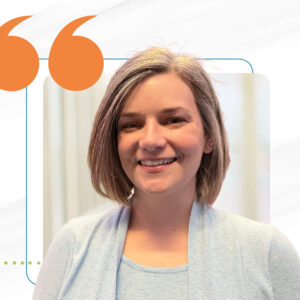
“It is so important that the science reflects the experiences of people affected by the disease, their loved ones, and their community,” said Stephanie, who has previously worked as a nurse practitioner and lives with MS herself.
“Scientists want to do the research that has the biggest impact,” she went on. “We do that by listening to the people and their needs. It is incredibly eye-opening to listen, to learn, and to let them be the drivers of what we do.”
Turning Lived Experience into Research
One such example is an ACP project exploring the relationship between MS and menopause. It began when a woman living with MS approached the organisation after struggling to find clear answers about her symptoms and experiences.
“She told us she could not get straight answers, that she was being bounced around from specialist to specialist, and that no one could tell her if she was dealing with MS, menopause, or something else entirely,” said Stephanie.
Her experience was far from unusual. Rather than allowing those questions to go unanswered, ACP worked with her to develop a pilot study. That initial research then led to published scientific papers and, subsequently, a nationally funded research grant focused on MS and menopause.
“This was driven entirely by someone living with MS, drawing on their own lived experience,” Stephanie explained. “We have been able to turn those experiences into scientific research that addresses questions our community has identified as important.
“That is really what our organisation is about: ensuring that people affected by MS, alongside their care partners, are the ones identifying and prioritising the research agenda – not the other way around.”
Unlocking the Potential of MS Research Data
Another major ACP project is the Data Challenge, launched in June 2026 to give MS research teams access to two vast collections of research data. The initiative aims to unlock new scientific insights by putting decades of information collected from people living with MS into the hands of researchers.
The first of these is a biobank, a library of biological samples. It includes a repository of blood samples that has supported more than 150 studies to date. It also contains the full DNA sequence, or genomics, of everyone involved.
The second is iConquerMS, which comprises data from more than 11,000 people with MS. Through the REAL MS study, participants have been sharing information about their condition and experiences for the past decade, creating a valuable resource for understanding how MS affects people over time.
For the Data Challenge, research teams were invited to propose questions they would like to investigate using the information in these datasets. An ACP review panel, made up of an equal number of scientific steering committee members and people with lived experience, then selected three projects. The teams are now working on the studies, with findings expected in the coming months.
“We have one team working with the genomics data, and two teams working with the REAL MS data,” said Stephanie, explaining that the research topics include MS progression patterns and the impact of biological ageing. “I am really excited to see what insights they come up with.”
Expanding the Reach of the Data Challenge
And this is just the beginning. The 2026 Data Challenge was designed as a pilot, and ACP hopes to extend it to even more research teams next year.
“This is the first year, so we kept it small, but the vision is to grow it to hopefully 10 or more teams a year,” explained Stephanie.
“We have so much data, and our mission is to get it into the hands of people who can combine it and ask questions of it.”
Those questions, she added, will always be guided by the people who matter most – people living with MS and their loved ones.
Stephanie Buxhoeveden in Conversation: Ageing, Exercise and Brain HealthAt Patient Community Day 2026, Stephanie shared her personal perspectives on living with MS, from recognising the effects of ageing to the importance of staying physically active. Watch these two short videos to hear her insights. |
|
Ageing with MS: Is It MS Progression or Something Else? Not every new symptom is necessarily caused by MS. Stephanie explains why ageing, other health conditions and everyday movement matter when managing MS.
|
|
Exercise and MS: Why Small Steps Matter Can just 10–15 minutes of movement make a difference? Hear Stephanie’s perspective on making physical activity more manageable while living with MS. |