For people living with NMOSD and MOGAD, access to accurate information andspecialist knowledge can make a life-changing difference. Yet finding answers – and the right people to provide them – is not always easy.
The Spanish Association for NMOSD and MOGAD (ES NMO SD) is the country’s only patient advocacy group focusing exclusively on these conditions. And considering what is has achieved, it is hard to believe it is less than three years old.
In that short time, ES NMO SD has developed a range of Spanish-language disease education resources, established annual patient education days and created a WhatsApp group for people to share their experiences. It has also set up a network of treating neurologists who share cases and learn from each other, and launched a digital symptom tracker to aid people’s conversations with their healthcare teams.
Sharing Specialist NMOSD and MOGAD Knowledge Across Spain
Each of these projects serves a different need within the community, yet they are all joined by the single thread of sharing knowledge, explained Agustín Fonts, co-founder of ES NMO SD and a person living with NMOSD.
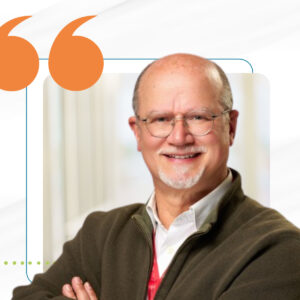
“Our illnesses are so little known,” he said. “Even the neurologists who treat us sometimes have difficulties understanding or distinguishing symptoms.”
He says this is particularly true outside of the big cities. “I live in Barcelona, where we have a big hospital. But if you live in a small village in the centre of Spain where are you going to find a neurologist who understands your condition? Our projects allow the flow of information from areas that have the knowledge to those that do not.”
To help address this imbalance, ES NMO SD has established a network of 35 neurologists from across Spain, from Barcelona to Madrid, Zaragoza to the Canary Islands. The network meets online every three to four months, giving specialists an opportunity to share cases and learn from one another. “We wanted to solve the problem of uneven distribution of knowledge,” said Agustín.
Sharing expertise between healthcare professionals is only part of the question. Educating people on their own condition is equally important, he went on.
ES NMO SD’s annual education day is an opportunity for people to put their questions to neurologists, who take part on a voluntary basis, either in person or online.
“It is not like being at a scientific congress where we cannot understand half of what is said,” Agustín explained. “We present the questions and they explain the answers simply, in words we can understand.”
Asked why events like this and ECTRIMS Patient Community Day are so important, Agustín said it was about connection and empowerment. “People feel lonely in two ways: one, because they do not know other people like them, and two, because their neurologists do not always have the answers they need,” he said. Bringing people together helps to address both of these.
Turning Everyday Symptoms into Better Conversations
ES NMO SD’s latest project takes the commitment to share knowledge directly into the consultation room. The Registro de Síntomas NMO y MOGAD is a digital symptom tracker that enables people to log their symptoms, rate their severity, and add daily notes. Users can then download that information as a PDF and take it to their medical appointment.
“We see our neurologist every six months, and it always starts with the same question: ‘How have you been?’,” said Agustín.
“It is very difficult to remember everything from the whole period, and you end up speaking about just the previous two weeks or so.”
The digital tool, however, provides the full six-month picture of how they have been feeling. That information can support more meaningful conversations can help inform clinical decisions.
Finding Purpose Through Advocacy
It has been an extraordinarily busy few years at ES NMO SD. But for Agustín, working so hard for the NMOSD and MOGAD community helps to deal with his own condition.
“I am not the archetypal NMOSD patient; I know there are people in a much worse situation than me,” he said, adding that he knows his health could decline in the future.
“Nothing is guaranteed; treatments are not 100% effective, so who knows what might happen? Being involved in the association makes me grateful for every day, and helps me see that I might have a role that is important for somebody else.”