For the Vienna MS Society, supporting people with multiple sclerosis means looking beyond medication.
 Treatments are important, but they are only one part of living well with a condition like MS. To live as full and independent a life as possible, people also need to feel heard and have access to the right support.
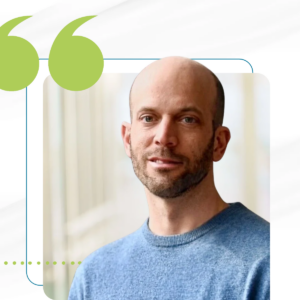
This is the philosophy guiding the organisation’s work, explained Managing Director Christian Strasser.
Christian, who is also an Austrian MS Society board member, said: “It comes down to participation in society, as a whole person. If you wake up every day feeling healthy, you can work, educate yourself, build a family – you can do anything you want. But with MS, you may face disadvantages in your professional life, your relationships, and your sex life, for example, that are not your fault.” Such challenges, he added, can also lead to loneliness and isolation.
Advocating for MS Care in Vienna
While Austria has one of the best health systems in the world when it comes to access to treatment availability, Christian pointed to gaps in other areas of care, particularly rehabilitation. People may be refused rehabilitation services because they are not expected to reverse existing neurological damage or disability.
 “We know that MS is not curable,” said Christian. “We also know that if it does not get worse, that is a good outcome.”
Helping to fill these gaps is central to Vienna MS Society’s work. The organisation connects people living with MS to psychotherapists, physiotherapists, dietitians and counsellors, for example, alongside peer-support and self-help groups. It also shares information and advocates for the MS community at the political level, particularly around the topic of rehabilitation.
Beyond Medication: Expanding the Focus of Real-Life Needs
Looking to the future, Christian hopes that research will place more of a focus on topics outside of medication.
“There is so much progress and so much happening in MS research,” he said. “I think the challenge now is how we translate that evidence and progress into something meaningful for the people living with the condition.
“That means looking beyond medical treatments alone. BTK inhibitors, for example, offer great hope to many, but we also need to focus on the wider aspects of managing MS, particularly the things people can do themselves to improve their quality of life.”
He highlighted significant unmet needs in areas such as cognition, fatigue, sleep, and sexual dysfunction – challenges that can have a profound impact on daily life but do not always receive sufficient attention.
Nothing About Us Without Us
For Christian, events like Patient Community Day are both a step in the right direction and a reflection of how things are changing.
“For many years, there was a clear hierarchy between patients and the people treating them. Pharmaceutical companies and researchers focused on developing new treatments and medications, while patients were largely expected to simply take the prescribed medication and trust that it would benefit them.
“But that relationship is changing. In recent years, particularly through ECTRIMS, we have seen a shift towards greater patient involvement. It is part of a wider societal change: people no longer want to be talked down to or have decisions made on their behalf. They want to be involved and have a say.
“There has also been a shift in focus among researchers, who are now more curious as to what life is really like for the people they treat.”
The guiding principle, he went on, is simple: ‘nothing about us without us’.
With Patient Community Day coming to Vienna in 2027, the Vienna MS Society is looking forward to welcoming the international community to its home city.
“It is a great opportunity for the whole community to come together in this really great city,” Christian said. He hopes the event will also reinforce the crucial role research plays in finding better ways to manage the symptoms and improve the everyday lives of people living with MS.