From a virtual ECTRIMS Patient Community Day (PCD) watch party for people from across Africa, to a pioneering project aimed at amplifying Black voices in MS research, one advocate is determined to make sure no one is left out of the conversation.
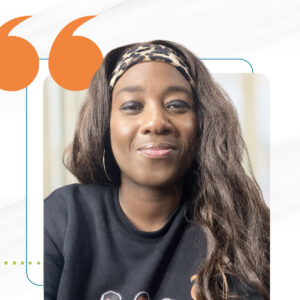
Natalie Busari, founder of The Nerve of My MS, knows that being heard can make all the difference to life with the condition. Yet for many people with Black heritage, opportunities to share their experiences, influence research and shape healthcare remain limited.
“We don’t see ourselves in conferences, in conversations and in meetings about multiple sclerosis,” she said. Changing that, she went on, is the driving force of her work.
Bringing Africa into the MS Conversation
This was the second year Natalie had organised a virtual PCD watch party. As the attendee numbers started to climb, she thought her computer had broken.
“We had nearly 2,000 people from countries including Ghana, Nigeria, South Africa, the Democratic Republic of the Congo, Togo and Ivory Coast. I could not believe it,” she said, adding that people were free to drop in and out of the event as it went along.
Hosted on the interactive online platform GoBrunch, the watch party gave people the chance to chat among themselves before, during and after the main event, which was streamed live from Toronto.
Natalie said she was blown away by the level of interaction among the participants. “So many people were asking questions and communicating with each other. We had meant to have a few virtual breakout rooms, but everyone stayed in the main chat, just talking away,” she said.
Participants also voted on a collective question about research, treatment availability and support for people in lower-resource countries. When it was selected during the live event, the chat erupted in celebration.
Explaining why she had decided to host the watch party, Natalie said it was about increasing the reach of PCD to as many people as possible.
“In Europe, people are aware of these things and talk about them. But in Africa, there is a stigma within the culture, so many people are literally by themselves. Even if they can afford to speak to a neurologist, this is the kind of information they do not have access to,” she said.
Feeling part of a larger community of people living with the condition helps them realise that their experiences “are not all in their head”, she added.
Building MS Research around the Black Community
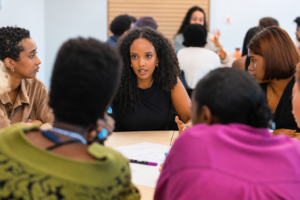 That same commitment to representation is driving another of the organisation’s initiatives: Black MS Voices, a UK project designed to better understand the experiences of Black people living with MS and the barriers they face in participating in research.
Small, informal listening lunches in London, Birmingham and Manchester will give Black people living with MS a comfortable environment to discuss their experiences. These conversations will explore barriers to clinical trial participation within Black communities, with a view to establishing a community-led MS registry.
Fewer than 200 people in the existing UK MS Registry identify as being of Black heritage, Natalie explained. Yet without diverse participation, researchers can miss important differences in people’s experiences of MS and their responses to treatment.
“It’s important that we are represented in clinical trials so we can understand whether these medicines actually work for us. Looking at the figures for trials of different MS therapies, it is clear that not many Black people have taken part,” said Natalie.
“If more of us are involved, we can get a clearer picture of how treatments work across different populations. A medicine might work well for a small group, but that doesn’t necessarily mean it will work in the same way for everyone. And if something goes wrong, we need enough representation to recognise it and investigate why.”
Building Trust Through Community-Led Research
For Natalie, improving diversity in MS research requires more than simply encouraging people to enrol in clinical trials.
It means understanding concerns, building trust and involving communities from the beginning – because people are more likely to take part when they have helped design the research themselves. Through Black MS Voices, Natalie plans to gather the experiences and perspectives of Black people living with MS, using what participants share to inform a report exploring the barriers to research participation. Importantly, the findings will help determine whether a dedicated, community-led registry could help overcome those barriers.
Ultimately, Natalie wants to see a future in which nobody in the MS community feels invisible and where research reflects the diversity of the people it is intended to serve. Because everyone deserves to be heard, represented and included in shaping the future of MS research and care.