Scientific progress in MS is not driven by research laboratories alone. It also depends on listening to the people living with the disease, understanding their experiences and ensuring their voices help shape the direction of research.
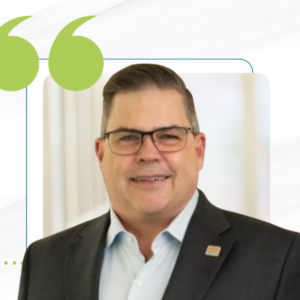
That’s according to Tim Coetzee, President and CEO of the National Multiple Sclerosis Society (NMSS). “I believe the true experts in MS are the people who live with the disease,” he said. “They experience MS 24 hours a day, seven days a week; they don’t get to switch it off, and that makes their expertise invaluable.”
By bringing scientific and clinical experts together with people who have lived experience, ECTRIMS Patient Community Day (PCD) makes a really important statement, he went on.
“Patients are not simply an audience. They are participants, collaborators and co-creators in the solutions we are working towards as a community,” he said.
“It is about much more than sharing information. It is about sending a clear message: we are with you on this journey, as partners, allies and supporters, as people living with MS and their loved ones navigate the challenges of the disease.”
The collaborative spirit behind PCD reflects the wider approach taken by the NMSS, which has funded research continuously since 1947. Its ambition is twofold: to improve life for people living with MS now and to work towards a future without the disease, Tim explained.
International Progressive MS Alliance: Accelerating Research and Treatments
One way the society is working to meet these aims is through the International Progressive MS Alliance. The project brings together MS organisations from around the world to address the challenges faced by people with progressive forms of the condition.
“We have three priorities here. We want to stop progression, by funding science to address the biology of progression. We want to accelerate clinical trials to deliver new treatments, because we need more, faster, better clinical trials in progressive MS,” Tim said.
“The third priority is to enhance wellbeing for people with proven therapies, because people are still living with progressive MS in the time it takes us to find the solutions.”
Global Prevention Initiative: Can Multiple Sclerosis Be Prevented?
Another collaborative NMSS project is the Global Prevention Initiative, which brings together international partners to explore whether MS can ultimately be prevented. With advances in early diagnosis and understanding the disease before symptoms appear, Tim believes this is becoming a realistic scientific ambition.
“We believe that MS is preventable,” he said. “With the advances of science today, that is not a pipe dream anymore. We now are focusing on the scientific priorities around how to identify who is at risk, and what you would need to do to be able to prevent the disease at scale.”
For Tim, such initiatives demonstrate why bringing communities together matters. The same principles that make PCD valuable, those of sharing knowledge, breaking down barriers and working towards common goals, also drives international research partnerships.
He believes the responsibility of the MS community is to address the needs of people living with the disease now while also keeping those of future generations in mind. And that is something that can only be achieved when everyone is pulling in the same direction. “We are stronger when we are together,” he added.
Overall, Tim had a clear message for those attending PCD: take what you learn and put it into action. “Share information with family, friends and employers, but also take it into conversations with the healthcare professionals who are responsible for your care,” he said, adding that people living with MS can become ambassadors for progress.