Living with MS or another long-term neurological condition can affect an entire family, including children who may find themselves taking on caring responsibilities at a young age.
 For these children, balancing school, friendships and everyday childhood experiences with supporting a parent can sometimes be overwhelming and leave them feeling isolated.
Recognising this challenge, UK-based charity Talks with MS will be running a free programme of summer activities in 2027 for children whose parents live with a chronic condition or disability.
Sponsored by the JD Foundation, the programme will run across north, south and west London during the summer holidays. Open to children aged seven to 16, it aims to give young carers the chance to have fun, share their experiences and, importantly, simply enjoy being children.
Giving Young Carers the Childhood They Deserve

Terri-Louise Brown, the charity’s founder and CEO, understands only too well the impact a condition such as MS can have on children. Reflecting on the times when her own symptoms were particularly challenging, she recalled how easily everyday requests for help could become part of her son’s routine.
“I took for granted those days where I would ask my son to get me a drink, or a piece of toast, for example.”
She says young carers often find themselves in situations they never chose, and have to balance their responsibilities at home with childhood, education and friendship.
“They are in school like everyone else, but when they come home, they may have to be the person who gets the medications, gets the drinks, or puts something on to eat,” she explained.
“These kids did not ask necessarily to be born into this space. Before anything, they are children. We hope the summer activities will remind them of that.”
The summer programme aims to provide some respite. It will include day trips to an amusement park and a zoo, alongside full-day activity sessions in each of the three London areas. Activities will include creating a storybook about their experiences, giving the children a way to explore and communicate what their caring responsibilities mean to them. 
The regional approach is intended to make the programme accessible to families across London, rather than restricting participation because of travel distances. Each location will accommodate up to 15 children, and Talks with MS also hopes to secure food donations from businesses to help make the sessions accessible to families facing financial pressures.
Importantly, the programme will also give children the opportunity to meet others in similar circumstances and recognise that they are not alone, said Terri-Louise. “We want them to know that we see them and appreciate them,” she said.
Celebrating Achievement and Disability Representation
The summer camp is just one of three projects currently being developed by Talks with MS, which was established to support people living with MS and champion the wider disability community.
Its Empowerment Awards, which celebrate the achievements of people living with disabilities, will return for a third year on 30 April 2027. In the young carers category, which is also sponsored by the JD Foundation, every child nominated will receive a trophy.
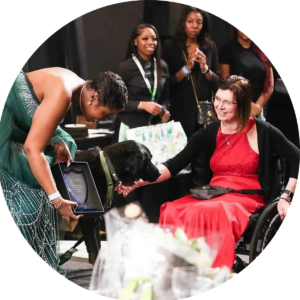
Terri-Louise described the awards, which encourage self-nomination, as an opportunity for people to share their stories. “There are so many people doing so many amazing things, but not necessarily getting that recognition,” she said.
A third initiative, Both & Talent, is the UK’s first talent agency for disabled and neurodivergent people of colour. The agency aims to create opportunities for individuals to pursue speaking engagements, brand partnerships and other professional opportunities without having to separate different aspects of their identity.
“We want to show people that they don’t have to decide what part of them shows up,” said Terri-Louise. “If you are a disabled person, and you are a person of colour, you do not have to divide the two to get a speaking gig, or that brand partnership. Both & Talent is for people to be their whole authentic selves.”
Visibility and Representation in MS Research
The common thread across all three projects is visibility and representation. The same philosophy underpins Talks with MS’ involvement in Patient Community Day.
“Someone in their first year of diagnosis, someone in their fifth year and someone in their tenth year could all be living with exactly the same condition, yet have completely different experiences. We have the lived experience, and it is important for researchers to hear what we are going through,” she said.
“Nothing beats speaking to someone who is living with the condition – someone who is experiencing the symptoms, trying to decide which medication to take, or even whether they want to take medication at all. Researchers need to hear from the people who are actually living with the condition: real people with real-life experiences.”
Award ceremony photograph courtesy of Talks with MS.