For more than a decade, the European Brain Council (EBC) has been working to raise the profile of brain health and ensure neurological conditions receive the recognition, research investment and attention they deserve.
At the heart of this work is a simple but important principle: people living with neurological conditions must have a meaningful voice in decisions that affect their lives. And its support for initiatives such as Patient Community Day reflects EBC’s belief that lived experience is an essential part of the conversation.
“Nobody can speak about what it is like to live with a brain condition quite like someone who has that lived experience,” said Frédéric Destrebecq, executive director at European Brain Council (EBC). “It is something they experience in both mind and body, and there is an intrinsic subjectivity to it that cannot be replicated or replaced.
“Even in the age of AI, human experience remains fundamentally unique, because every one of our brains is different. We are all individuals, and understanding what it truly means to live with a particular condition can only come from listening to those who experience it themselves.”
European Partnership for Brain Health: Strengthening Neuroscience Research Through Collaboration
One of the EBC’s key current initiatives is the European Partnership for Brain Health. This major collaborative effort has been designed to strengthen neuroscience research and improve outcomes for all people living with brain conditions.
Over 10 years, the partnership aims to support research across the entire spectrum of brain health, from fundamental science to the development and rollout of new treatments and innovations.
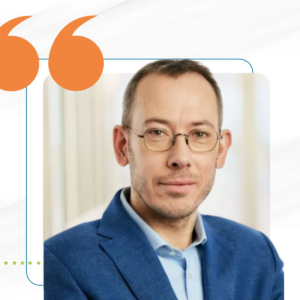
“The reality is that pursuing individual disease strategies is becoming increasingly difficult from a policy perspective. We need to develop a broader narrative and agenda that connects the needs of the different communities under the brain health umbrella,” said Frédéric.
“We are talking about around 400 neurological conditions and 200 psychiatric conditions, alongside a wide range of mental health challenges and rarer brain disorders. There is an enormous amount of work to be done.”
He believes there is a “real window of opportunity”, with the World Health Organization and other international institutions increasingly recognising the need to address the burden of brain conditions. There is also growing recognition that investment in brain health research and care is not just a health priority, but an economic opportunity.
“If we all continue working in isolation, we risk losing that opportunity. Collectively, we can achieve much more than we ever could alone,” explained Frédéric.
“By working together and focusing on what unites us rather than what makes us different, we can achieve much more. There is a beautiful expression in English: ‘a rising tide lifts all boats’. Having a shared brain health strategy does not mean abandoning your disease-specific identity or priorities. On the contrary, it gives individual communities a stronger platform from which to advance their own needs.”
Brain Innovation Days: Connecting Neuroscience Innovation with Patient Needs
The EBC is also continuing to develop opportunities for collaboration through its annual Brain Innovation Days for researchers, start-ups, innovators, investors and patient representatives.
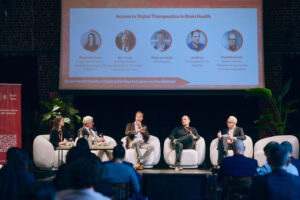
Frédéric explained that the event provides a platform to celebrate advances in neuroscience, share successful approaches and identify barriers to translating research into practical improvements. Crucially, it also creates opportunities for conversations between people with lived experience and those developing new treatments and technologies.
Through both projects, EBC hopes to ensure research stays remains connected to the people it ultimately aims to benefit. “It’s not only about the researchers,” Frédéric explained. “It’s also about society, patient organisations and communities.”
Photo courtesy of Brain Innovation Days 2025.