Scientific discoveries alone do not improve the lives of people living with MS and associated neurological conditions. What matters is how those discoveries and innovations are moved out of the lab and translated into better care, improved access and meaningful changes in everyday life.
For the Multiple Sclerosis Association of America (MSAA), bridging the gap between research and real-world care is a major priority.
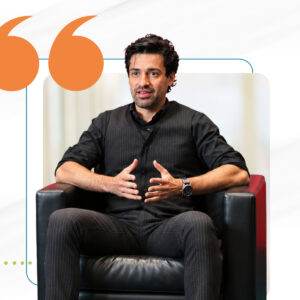
“There may be a new guideline around MRI, or advice around heat, for example, but so what? What can I actually do with that information?” asked Claude Pinnock, MSAA’s Chief Health and Operating Officer.
One way MSAA is helping to answer that question is through its MS Implementation Network (MSIN), an initiative designed to turn advances in MS research into practical improvements in outcomes.
“The goal is to accelerate the implementation of new advances in MS care,” Claude explained. “By figuring out how they improve health economics and outcomes and how they are scalable, we can then use that as a lever to shift change.”
Bringing Research into Everyday MS Care
The MSIN is a practice-based research network of 20 healthcare providers across the United States who will share the data and experiences of more than 2,000 participating patients. This will allow researchers and healthcare professionals to better understand how new approaches to MS care work in the real -world, and to learn from each other.
In January 2027, MSAA itself will become the network’s 21st participating site. This will open the door to people who do not receive care at one of the existing clinical sites, allowing them to still contribute their experiences and participate in research.
“This allows us to have a much more generalisable cohort of folks in the project and test innovations that aren’t necessarily delivered in the clinic,” said Claude.
Why Representation Matters
A central feature of the network is its diversity. All participating MSIN members have been carefully selected to represent “the whole diaspora” of MS care, rather than focusing exclusively on specialist centres of excellence.
This is particularly important because the network will also serve as a registry, collecting information about patient experiences and health outcomes over time.
What is a patient registry?>> Find out here |
“People experience MS care differently,” said Claude, who lives with the condition himself. “Personally, I was diagnosed quickly, was put on a highly efficacious disease-modifying therapy (DMT), and responded well. I have a whole care team around me.”
But that is not everyone’s experience. Some people face lengthy delays before receiving a diagnosis, while others struggle to find access to specialist healthcare professionals, MRIs or DMTs, he went on.
For Claude, understanding these differences is essential to improving standards of care.
“We need to shift, certainly in the United States but also more globally, to a policy of standard of care. The only way we can do that is to generate enough research to show that the health economics and outcomes make sense to the Centers for Medicare & Medicaid Services (CMS).”
Importantly, people living with MS also have a direct role in shaping the network’s research priorities. Questions for the network are chosen by a voting governing body, using a multi-level system of consensus building, which includes people living with MS.
Asked why it was so important to ensure the patient voice was included, Claude said it helped avoid “making decisions in a bubble”.
“Having individuals living with the disease on the governing board is critical to keeping that lens at the forefront,” he added.
Learning from a Global Community
For Claude and MSAA, the ultimate goal is to ensure that advances in MS research translate into better care for everyone. It’s also why the organisation values its involvement in Patient Community Day.
“We have limited research dollars, so we always have to be thinking whether our endpoints are things that actually matter to people living with MS and their care partners,” he said, adding that the international element of the event was particularly valuable.
“By bringing perspectives from all over the world together into one room, you can see what has already been tried, what has failed, and what we have learnt from that failure. That gives us a shortcut on the path to the best outcomes possible.”